
Union History

Learn about Union History
The American Federation of State, County and Municipal Employees (AFSCME) is the largest Labor Union of public employees in the United States. It represents 1.4 million public sector employees and retirees, including health care workers, corrections officers, sanitation workers, police officers, firefighters, and childcare providers. Originally founded in Madison, Wisconsin, in 1932, AFSCME is part of the AFL_CIO, one of the two main labor federations in the United States. AFSCME has had five presidents since its founding. It is comprised of over 3,400 Unions across the Nation from Alaska to Puerto Rico even including District of Columbia.
Learn about the extensive and colorful history and influential power behind the Unions of Minnesota. From the early 1800's to now, people have come together to fight for the rights of labor workers for hundreds of years!
Check out this link for a complete detailed history: Minnesota Labor Union History
Local 1092 History
AFSCME Local 1092 was originally chartered in 1948, following the opening and staffing expansion of the Moose Lake State Hospital in the late 1930's and 1940's, when the Minnesota state hospital and healthcare employees organized under AFSCME Council 6.
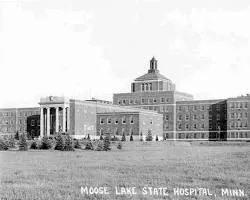
When AFSCME Local 1092 was established to represent frontline state hospital workers at Moose Lake in the late 1940s, the local faced severe structural, legal, and operational hardships:
- Exclusion from Legal Collective Bargaining Rights: In the late 1940s and 1950s, public-sector employees in Minnesota had no statutory right to formal collective bargaining. The federal National Labor Relations Act excluded public employees, and Minnesota had not yet enacted comprehensive public employee labor legislation (the Public Employment Labor Relations Act, or PELRA, was not passed until 1971). Early union officers had to advocate through legislative lobbying and informal conferences rather than legally binding contract negotiations.
- Severe Institutional Understaffing and Overcrowding: Post-WWII state institutions across Minnesota operated under chronic funding deficits. Moose Lake State Hospital saw patient censuses surge faster than legislative allocations, forcing attendants, nurses, and grounds staff to manage overwhelming patient-to-staff ratios with minimal direct-care resources.
- Exhausting Shifts and Mandatory Overtime: Prior to widespread standard 40-hour workweek enforcement for institutional workers, hospital attendants routinely worked 48- to 60-hour workweeks with split shifts, mandatory overtime, and minimal relief coverage.
- Low Compensation Relative to Private Industry: State institutional wages severely lagged behind postwar industrial wages, leading to high turnover among attendants and support personnel. Organizing workers around wage improvements was made difficult by tight, biennial legislative budget caps.
- Workplace Safety and Direct-Care Physical Hazards: Direct support staff and psychiatric attendants managed acute behavioral crises without modern de-escalation protocols, sufficient personal safety equipment, or adequate staffing back-up, resulting in frequent workplace injuries and high burnout.
- Institutional Opposition and Management Patronage: In the era before rigid state civil service protections and union recognition were fully secured, local leadership frequently encountered anti-union pushback from institutional administration, including threats of arbitrary discipline or schedule retaliation against active organizers.
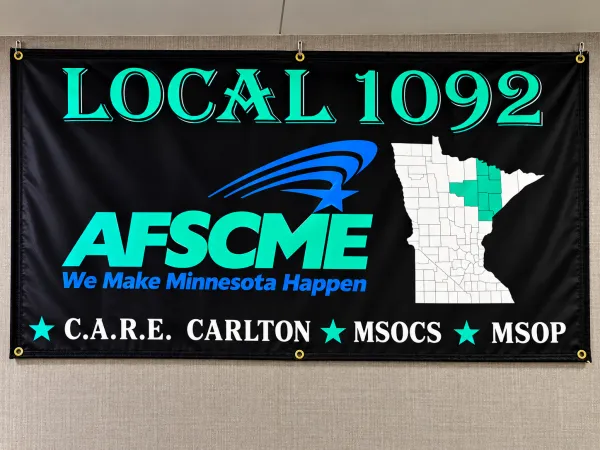
So what are we doing now??
Institutional Transition Protections (Moose Lake Facility Restructuring)
When the original Moose Lake State Hospital transitioned in the mid-1990s from traditional psychiatric inpatient hospitalization toward regional state services, specialized community services, and the establishment of the Minnesota Sex Offender Program (MSOP) and Direct Care and Treatment (DCT) facilities, Local 1092 negotiated critical job retention safeguards. The union secured member retention, transfer seniority, and reclassification protections that prevented mass public sector layoffs across Carlton County.
Establishment of Joint Labor Management Committees (LMC)
Through local bargaining and labor coordination, Local 1092 established dedicated, facility-level Labor Management Committees across all operational units:
- MSOP Labor Management & Safety Committees: Securing direct member oversight on high-risk safety protocols, perimeter controls, incident response staffing levels, and crisis de-escalation equipment.
- CARE Carlton LMC: Establishing tailored operational input for chemical dependency and rehabilitation facilities.
- MSOCS LMC: Protecting staffing ratios, travel reimbursements, and shift rules across community-based group home and supportive housing settings.
Mandatory Overtime Restrictions & Penalty Pay
Representing frontline security counselors, nurses, direct care technicians, and support staff, Local 1092 and Council 5 fought back against institutional forced overtime. Key contract victories include:
- Strict operational limits and inverse-seniority draft procedures for mandating extra shifts.
- Financial penalties paid directly to workers (including compensation bonuses for improperly forced overtime).
- Guaranteed rest periods between scheduled operational shifts.
Clear Personnel File Protections (Article 16)
Local 1092 established strict contractual provisions enforcing clear, automatic time limits on administrative documentation:
- Full removal of written reprimands after 18 months of clean service.
- Expungement of suspensions of 10 days or fewer after three years.
- Automatic expiration of "Letters of Expectation" after six months of satisfactory performance, ensuring arbitrary documentation cannot linger permanently against a member's career progression.
Legislative Funding & Frontline Worker Recognition
Working through AFSCME Council 5, Local 1092 members have mobilized at the state capitol in St. Paul to lobby the Minnesota Legislature directly, securing critical capital bonding for facility upgrades in Northeast Minnesota, funding allocations to expand DCT(Direct Care & Treatment) security staffing, and statewide Front Line Worker Pay distributions following high-hazard public service during public health emergencies.